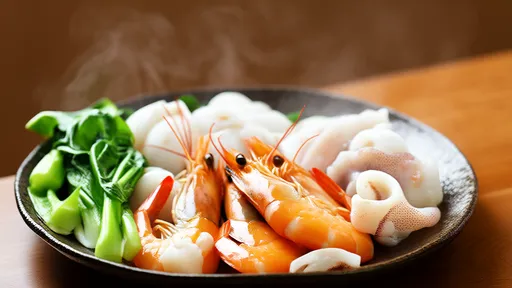
In the bustling kitchens of Cantonese restaurants, there exists a culinary philosophy that transcends mere cooking—it’s a race against time. The art of blanching, known as baizhuo in Mandarin, demands precision, intuition, and an almost obsessive attention to seconds. For shrimp, squid, and leafy greens, every moment in boiling water is a delicate dance between perfection and ruin. This isn’t just about technique; it’s about honoring the ingredients.
Imagine a plump, fresh shrimp, its shell shimmering with promise. Drop it into rolling boiling water, and within 30 to 45 seconds, it transforms. The flesh firms up, turning opaque with a slight curl, while retaining a succulent sweetness that evaporates if left even a heartbeat too long. Overcook it, and you’re left with rubbery disappointment—a tragedy for something so inherently delicate. Chefs often rely on visual cues: the color shift from translucent gray to vibrant pink is their stopwatch. It’s a skill honed through repetition, where timing isn’t measured in minutes but in instinct.
Squid, with its tender yet temperamental nature, presents a different challenge. Sliced into rings or scored for curling, it demands even stricter vigilance. 15 to 20 seconds is all it takes. Beyond that, the texture turns from tender to tough, from delightful to chewy. The water must be at a furious boil, the squid submerged briefly, then shocked in ice water to halt the cooking instantly. This flash-cooking locks in the ocean’s freshness, making each bite a crisp, clean revelation. There’s no room for distraction here; a glanced-away moment is a costly mistake.
Leafy greens, like bok choy or gai lan, might seem forgiving, but they are no less demanding. Their stalks need slight softening while their leaves should remain vibrant and crisp. 20 to 30 seconds achieves this balance. Any longer, and the chlorophyll-breakdown turns them mushy and dull, leaching out nutrients and flavor. The key is uniformity—ensuring each piece is evenly exposed to the heat. It’s a swift plunge, a quick lift, and an immediate cool-down to preserve that emerald glow and satisfying crunch.
Why such ruthlessness with time? It’s rooted in science. Proteins in seafood denature quickly at high temperatures; overcooking causes them to tighten excessively, squeezing out moisture. Vegetables, similarly, lose cell structure and vitamins when subjected to prolonged heat. Blanching isn’t just cooking—it’s a preservation method, capturing peak freshness at the exact moment it’s achieved. This technique respects the ingredient’s integrity, something deeply embedded in Cantonese culinary ethos where minimal intervention highlights natural quality.
Behind this precision lies years of tradition. Master chefs pass down these timings like sacred knowledge, often without written recipes. Apprentices learn by watching, by feeling the rhythm of the kitchen. There’s an unspoken rule: respect the clock, and it will reward you with perfection. In home kitchens, though, anxiety reigns. Novices hover over pots, timers in hand, fearing the consequences of a missed second. Yet, even here, success comes with practice—and perhaps a bit of courage.
Modern tools have entered the fray. Digital timers, sous-vide machines, and even smart kettles offer precision, but they can’t replicate the intuition of an experienced cook. The sizzle, the steam, the visual transformation—these are the true guides. Technology aids, but it doesn’t replace the human touch required to judge doneness by sight and smell. In professional settings, some kitchens use synchronized timers for batch cooking, ensuring consistency during rush hours, but the fundamentals remain unchanged: speed is non-negotiable.
The cultural significance of blanching extends beyond the plate. It reflects a broader philosophy—efficiency without rush, care without complication. In a fast-paced world, this method is a reminder that some things shouldn’t be hurried, yet shouldn’t be delayed. It’s about finding that fleeting sweet spot where everything aligns. For diners, the result is unmistakable: shrimp that burst with juice, squid that melts with ease, greens that snap with life. Each bite tells a story of timing mastered.
Not everyone appreciates this subtlety. To the uninitiated, blanched dishes might seem simple, even bland. But true connoisseurs recognize the skill involved—the ability to elevate humble ingredients through restraint. It’s a testament to the idea that less is often more, provided that "less" is executed with unwavering precision. This approach contrasts with heavier cooking methods where sauces and spices dominate; here, the ingredient is the star, and time is its director.
Errors in blanching are painfully obvious. Overcooked shrimp become tough and lose their sweetness, resembling more of a punishment than a treat. Squid turns into a rubbery mess, requiring effort to chew rather than offering effortless enjoyment. Greens wilt into soggy, unappetizing heaps, their nutritional value and color drained away. These mistakes aren’t just culinary failures; they’re disrespectful to the produce and the effort that brought it to the kitchen. There’s no hiding behind seasonings or broths—the truth is laid bare on the palate.
For those eager to try, the advice is straightforward: use plenty of boiling water to maintain temperature, don’t overcrowd the pot, and have an ice bath ready. But more importantly, stay present. Don’t multitask; this process demands full attention. Start with practice batches, note the seconds, and adjust based on outcome. It’s a learning curve, but one that yields delicious rewards. Remember, even experts started somewhere, and perfection is built one second at a time.
In conclusion, the blanching timetable for shrimp, squid, and greens is more than a set of numbers—it’s a philosophy of precision and respect. It teaches patience, awareness, and the beauty of brevity. In a world where speed often means carelessness, this ancient technique stands as a reminder that some things are worth timing to the second. So next time you blanch, watch the clock, but also listen to the food. It will tell you when it’s ready, if you’re paying close enough attention.
By /Aug 20, 2025
By /Aug 20, 2025

By /Aug 20, 2025
By /Aug 20, 2025
By /Aug 20, 2025
By /Aug 20, 2025
By /Aug 20, 2025
By /Aug 20, 2025

By /Aug 20, 2025
By /Aug 20, 2025
By /Aug 20, 2025

By /Aug 20, 2025
By /Aug 20, 2025
By /Aug 20, 2025
By /Aug 20, 2025

By /Aug 20, 2025
By /Aug 20, 2025
By /Aug 20, 2025
By /Aug 20, 2025
By /Aug 20, 2025