In the quiet hum of a kitchen, the oven stands as a sentinel of culinary transformation. For generations, home bakers and professional chefs alike have relied on a peculiar, almost folkloric signal to gauge its readiness: the dimming of the glowing heating elements. This visual cue, passed down through recipe cards and whispered tips, is more than just old wives' tale; it is a fascinating interplay of basic physics, engineering design, and practical thermodynamics. To understand why the elements go dark is to understand the very heart of how an oven maintains a stable environment for perfect roasts, golden breads, and delicate pastries.
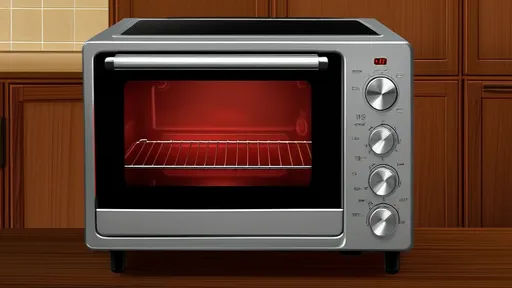
The journey begins with the simple act of turning the oven dial. Electricity surges through the high-resistance metal coils, typically made from an alloy like nichrome. This immediate and intense electrical resistance generates heat, causing the elements to radiate a bright, orange-red glow. This incandescence is a clear sign of energy being converted directly into thermal radiation. At this initial stage, the oven is a cold box, and the thermostat—a device often mounted on the interior wall—senses a temperature far below the set point. In response, it keeps the circuit to the heating elements closed, allowing maximum power to flow uninterrupted. The elements burn bright, working at their full capacity to rapidly heat the large volume of air inside the cavity.
As heat builds, the air temperature begins to climb steadily. The true maestro of this operation is the thermostat. This crucial component contains a temperature sensor, often a bimetallic strip. This strip is crafted from two different metals bonded together, each with a unique rate of thermal expansion. As the temperature rises, the strip bends in a predictable manner. Initially, it is bent in such a way that it maintains physical contact, completing the electrical circuit that powers the heating elements. The oven is in its active heating phase, and the elements remain a vibrant, glaring red.
The pivotal moment occurs as the air temperature approaches the user's selected setting. The bending bimetallic strip in the thermostat reaches a critical point. It flexes just enough to break the electrical contact, snapping open the circuit. The flow of electricity to the heating elements is instantly cut off. Deprived of their power source, the elements begin to cool rapidly. The intense thermal radiation ceases, and their bright glow fades, eventually leaving them a dull, dark gray or black. This is the visual event we have been waiting for: the dimming. It is a direct and immediate consequence of the thermostat fulfilling its primary duty—to stop the heating process once the target temperature is achieved.
However, the story does not end with the elements going dark. An oven is not a perfectly insulated chamber; heat is constantly being lost through its walls and door, and it is absorbed by the food placed inside. This natural heat loss causes the internal temperature to drift back down. The thermostat is continuously monitoring this decline. Once the temperature drops a certain number of degrees below the set point (a range known as the hysteresis), the bimetallic strip bends back into its original position, re-establishing the electrical contact. Power surges back to the elements, and they reignite, glowing brightly once more to add a burst of heat and correct the temperature drop. This cyclical process of heating (elements on, glowing) and idling (elements off, dark) continues for the duration of the cooking time, creating a stable average temperature.
While this visual indicator is a reliable rule of thumb for most standard baking and roasting tasks, its precision has limits. The dimming signals that the oven air has *approximately* reached the set temperature, but several factors can influence the accuracy of this moment. The location of the thermostat sensor is key; if the sensor is in a spot that heats up or cools down faster than the center of the oven where you place your food, there can be a discrepancy. Furthermore, the initial preheat is often the least stable period. The mass of the oven walls and racks is still soaking up heat, meaning the air might hit the temperature and trigger the thermostat to shut off the elements, but the entire thermal mass of the oven is not yet fully saturated. For tasks requiring extreme precision, such as tempering chocolate or baking intricate macarons, relying solely on the dimming of the elements is not advised. A standalone oven thermometer placed in the center of a rack provides a far more accurate reading of the true cooking environment.
The type of oven also changes the dynamics of this signal. In a conventional oven, where the heating elements are typically exposed at the top and bottom, the dimming is easily visible. In a convection oven, a fan circulates the hot air, which allows for more even heating and often faster preheating times. The elements may cycle on and off more frequently and for shorter durations, making the dimming event quicker and potentially less dramatic, but the fundamental principle remains identical. The glow and subsequent dimming are still dictated by the commands of the thermostat. Even in modern ovens with digital controls, which often use more sophisticated thermocouples or thermistor sensors and electronic switches (SSRs), the basic function is mirrored. The controller cuts power to the elements at the set temperature, causing them to go dark.
This simple observation connects us to a long history of appliance design. Before the era of digital displays and preheat beeps, this was the primary method for determining oven readiness. It is a beautiful example of a system providing its own user feedback through its inherent operation. The glowing elements are a promise of heat to come, and their quiet dimming is a signal of promise fulfilled. It represents a point of equilibrium, a brief moment of balance between energy input and thermal saturation before the constant, rhythmic dance of maintenance begins.
Therefore, the next time you peer through the glass door to see those fierce red coils soften into darkness, know that you are witnessing a miniature symphony of control. It is a dance of electricity, metal, and air, all governed by the silent, mechanical intelligence of the thermostat. This timeless visual cue remains a trusted, immediate, and utterly practical tool in the cook's arsenal, a perfectly designed signal born from the fundamental laws of heat and electricity.

By /Aug 20, 2025

By /Aug 20, 2025
By /Aug 20, 2025

By /Aug 20, 2025

By /Aug 20, 2025

By /Aug 20, 2025

By /Aug 20, 2025
By /Aug 20, 2025

By /Aug 20, 2025

By /Aug 20, 2025

By /Aug 20, 2025

By /Aug 20, 2025

By /Aug 20, 2025

By /Aug 20, 2025

By /Aug 20, 2025

By /Aug 20, 2025

By /Aug 20, 2025

By /Aug 20, 2025

By /Aug 20, 2025

By /Aug 20, 2025