In the quiet hum of modern kitchens, a revolution is simmering, one that turns a tedious culinary chore into a task of mere seconds. It’s a method whispered between home cooks and celebrated by chefs who value both efficiency and elegance: the frozen tomato skinning technique. This isn't just another kitchen hack; it's a fundamental rethinking of our interaction with a foundational ingredient, leveraging the simple, transformative power of temperature.
The principle is deceptively straightforward, a beautiful intersection of physics and food preparation. A ripe tomato, in its natural state, is a delicate balance of water-rich flesh encased in a thin, stubborn epidermis. The traditional method of scoring an X and blanching it in boiling water works, but it’s a process that involves precise timing, a pot of boiling water, and the risk of partially cooking the fruit, compromising its fresh, bright flavor. The frozen method sidesteps all of this with brilliant simplicity.
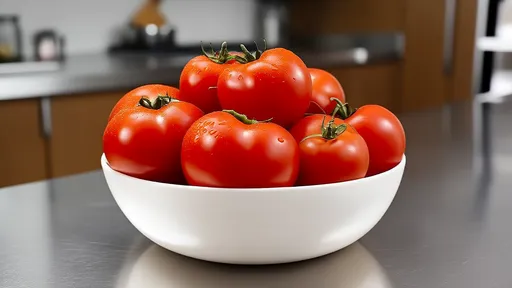
It begins with selection. The best candidates for this cryogenic treatment are tomatoes at their peak of ripeness. They should be firm yet yield slightly to gentle pressure, heavy for their size, and bursting with that unmistakable summery fragrance. Plum tomatoes like Romas are exceptional for sauces and canning, while larger beefsteak varieties work perfectly for dishes where beautiful, intact slices are desired. The first step is a thorough wash and a complete drying of each fruit; any surface moisture will cause them to stick together in the freezer, creating an unnecessary hurdle.
The journey to effortless peeling starts with the deep freeze. The tomatoes are placed in a single layer on a parchment-lined baking sheet or plate, ensuring they are not touching. This is crucial, as it allows the cold air to circulate around each one uniformly, facilitating a rapid and consistent freeze. The goal is not to preserve the tomato for long-term storage in this state, but to use the freezing process as a tool for structural change. The entire tray is then placed in the freezer for a minimum of four hours, though leaving them overnight is often easiest. The transformation happening within is silent but profound.
Inside the freezer, the water content of the tomato begins its dramatic phase change. Water molecules, which make up over 90% of the fruit's volume, expand as they crystallize into ice. This expansion creates immense internal pressure, specifically targeting the weakest structural points. The microscopic bonds holding the skin to the flesh, along with the pectin in the sub-epidermal layer, are no match for this force. The freezing process effectively performs a microscopic demolition, severing the connection between the skin and the glorious pulp within, all without any manual intervention.
When the time comes to peel, the procedure is almost shockingly swift. There's no need to thaw the fruit. One simply retrieves a rock-hard, deeply frozen tomato from the freezer. Holding it under a stream of cool running water from the tap, the magic unfolds. The water, even at a cool temperature, is vastly warmer than the frozen surface of the tomato. This rapid temperature shift causes the skin to contract instantly. The now-brittle skin, already separated from the flesh by the expansion of ice, cracks and wrinkles. With a gentle rub of the thumb, the entire skin slips off in one satisfying piece, like a silken glove being removed. It’s a instantaneous process, often taking less than ten seconds per tomato.
The advantages of this method extend far beyond mere speed. By completely avoiding heat, the tomato's cellular structure remains largely intact. This means no diluted flavor from waterlogging and no premature cooking. The result is a product that tastes profoundly fresher than its blanched counterpart. The texture is superior, perfect for fresh salsas, bruschetta, or caprese salads where a firm, uncooked bite is essential. For canning and sauce-making, this technique is a godsend, allowing for the processing of large batches without the constant monitoring of a blanching pot. The efficiency is unparalleled, turning a previously time-consuming prep session into a streamlined operation.
Once peeled, the tomatoes can be used immediately. They will thaw with remarkable speed at room temperature, especially if chopped, ready to be transformed into a chunky marinara, a smooth soup, or a fresh pico de gallo. If your recipe calls for seeded tomatoes, the semi-thawed state is actually ideal; the frozen flesh is firm enough to easily scoop out the seed pockets with a spoon before the tomato becomes too soft to handle neatly. For those who wish to preserve their harvest, the peeled, still-frozen tomatoes can be placed directly into freezer bags, saving valuable freezer space without the bulky skin and ready for a future mid-winter pasta sauce that tastes of August sunshine.
This technique is more than a convenient trick; it is a testament to the power of understanding food science. It demonstrates how a basic grasp of the properties of water and the effects of thermal shock can unlock a new level of culinary ease and quality. It empowers the home cook, replacing a messy, potentially dangerous step involving boiling water with a safe, clean, and incredibly effective alternative. It respects the ingredient, preserving its essential character rather than assaulting it with heat. In a world increasingly focused on smarter, not harder, solutions, the frozen tomato method stands out as a perfect example of kitchen intelligence, a small revelation waiting in your freezer.
By /Aug 20, 2025
By /Aug 20, 2025
By /Aug 20, 2025
By /Aug 20, 2025
By /Aug 20, 2025

By /Aug 20, 2025

By /Aug 20, 2025
By /Aug 20, 2025

By /Aug 20, 2025

By /Aug 20, 2025
By /Aug 20, 2025
By /Aug 20, 2025
By /Aug 20, 2025

By /Aug 20, 2025
By /Aug 20, 2025
By /Aug 20, 2025
By /Aug 20, 2025
By /Aug 20, 2025
By /Aug 20, 2025
By /Aug 20, 2025
