As the summer sun casts its golden glow and the scent of charcoal fills the air, the ritual of grilling becomes a centerpiece of warm-weather gatherings. While classics like burgers, ribs, and skewers often steal the spotlight, there exists a humble yet transformative companion that elevates the entire experience: the perilla leaf. Known for its distinctive aroma and refreshing qualities, this herb is not merely a garnish but a vital player in the art of barbecue, particularly in traditions where balance and flavor harmony are paramount.
Originating from regions of East Asia, the perilla leaf, sometimes referred to as shiso in Japanese cuisine or deulkkae in Korean, has been a culinary staple for centuries. Its jagged, heart-shaped form and vibrant green hue are visually striking, but it is the complex flavor profile that makes it indispensable. With notes of mint, basil, and a subtle, peppery undertone, it cuts through the richness of grilled meats, offering a palate-cleansing effect that is both unexpected and delightful. In the context of barbecue, where fatty, smoky, and savory elements dominate, the perilla leaf acts as a natural counterpoint, introducing a layer of freshness that prevents flavor fatigue.
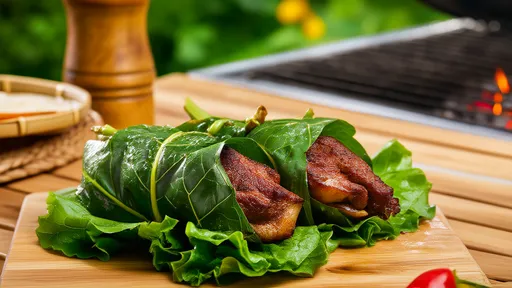
When wrapped around a piece of freshly grilled meat—be it succulent pork belly, marinated beef, or even spiced chicken—the perilla leaf does more than just add greenery. It creates a package of contrasting textures and temperatures. The warm, juicy meat encased in the cool, slightly crisp leaf is a sensation in itself. But the magic truly happens as you take a bite. The herb's essential oils, released by the heat of the meat, mingle with the fats and juices, creating an aromatic burst that enhances the meat's natural flavors rather than masking them. This synergy is what makes the combination so revered; it is a practice of culinary intelligence, understanding that sometimes the best way to highlight a flavor is to complement it with its opposite.
Beyond its role as a flavor enhancer, the perilla leaf is also celebrated for its digestive properties. Rich in antioxidants, vitamins, and compounds like rosmarinic acid, it has been traditionally used to aid digestion and reduce inflammation. In a meal heavy with grilled proteins and fats, this attribute is particularly valuable. It transforms the act of eating from a potentially heavy, indulgent experience into a more balanced and mindful one. The leaf’s natural oils help break down fats, making the meal feel lighter and more enjoyable, allowing you to savor each bite without the lingering sense of fullness that often follows a barbecue feast.
Culturally, the use of perilla leaves in barbecue is deeply rooted in communal dining practices. In Korean barbecue, for example, it is common to see platters of fresh perilla leaves alongside lettuce, garlic slices, and chili pastes. Diners are encouraged to create their own wraps, customizing each bundle to their taste. This interactive element adds a social dimension to the meal, turning eating into a shared activity that fosters connection and conversation. The tactile pleasure of assembling the perfect wrap—layering meat, a dab of sauce, perhaps a sliver of garlic—and then enjoying it in one satisfying mouthful is an integral part of the experience. It is a reminder that food is not just fuel but a medium for togetherness and joy.
For those new to using perilla leaves, selecting and preparing them is straightforward. Look for leaves that are vibrant green, without wilting or yellow spots. They should be firm to the touch and aromatic when gently bruised. Before serving, a quick rinse under cold water and a pat dry are all that is needed. Some prefer to leave them whole, while others might slice them thinly to mix into salads or relishes. However, for barbecue purposes, keeping them whole allows for the full wrapping experience, maximizing both flavor and texture.
Pairing perilla leaves with different types of grilled foods can yield exciting results. While they are classic with pork and beef, they also work wonderfully with grilled seafood. Imagine a piece of smoky grilled mackerel or salmon wrapped in a perilla leaf, the herb's brightness cutting through the oiliness of the fish. Vegetarian options, such as grilled tofu or mushrooms, also benefit from this treatment, gaining an extra layer of complexity from the leaf’s aroma. The versatility of perilla leaves means they can adapt to various cuisines and preferences, making them a valuable addition to any griller’s repertoire.
As summer progresses and grilling season hits its peak, embracing the perilla leaf could be the upgrade your barbecue needs. It invites a shift from mere consumption to a more engaged, flavorful, and health-conscious way of eating. In a single leaf, you find the essence of summer—fresh, vibrant, and utterly revitalizing. So next time you fire up the grill, remember to place a bundle of perilla leaves nearby. They might just become your secret weapon for creating unforgettable, balanced, and deeply satisfying meals under the open sky.
By /Aug 20, 2025
By /Aug 20, 2025

By /Aug 20, 2025
By /Aug 20, 2025

By /Aug 20, 2025
By /Aug 20, 2025
By /Aug 20, 2025
By /Aug 20, 2025

By /Aug 20, 2025
By /Aug 20, 2025
By /Aug 20, 2025

By /Aug 20, 2025

By /Aug 20, 2025
By /Aug 20, 2025
By /Aug 20, 2025

By /Aug 20, 2025
By /Aug 20, 2025
By /Aug 20, 2025

By /Aug 20, 2025
By /Aug 20, 2025
