It began, as many culinary revolutions do, with a happy accident. A forgotten spice jar left on the counter, a bowl of crisp apple slices intended for a snack, and a moment of pure, unadulterated curiosity. The result was nothing short of a revelation. The warm, earthy, and slightly smoky aroma of cumin, a spice we instinctively relegate to the savory realms of tacos, kebabs, and curries, dusted over the cool, sweet, and tart flesh of a fresh apple. It sounds like a dissonant chord, a flavor combination that shouldn’t work. Yet, it sings. This is not just a new snack; it’s a gateway to rethinking the very architecture of flavor on our palates.
The story of cumin is one of ancient journeys and culinary bedrock. Its tiny, ridged seeds have been found in four-thousand-year-old archaeological sites in Syria and ancient Egypt, where it was not only a culinary staple but also an item of value, placed in tombs with pharaohs. It traveled along the spice routes into the heart of the Roman Empire, where it was as ubiquitous as pepper is today. From there, it wove itself into the fabric of countless global cuisines, from the fiery curries of India to the complex moles of Mexico and the earthy stews of North Africa. Its profile is unmistakable: a pungent, warm aroma with a distinctive earthy bitterness and a subtle citrus undertone that emerges when the seeds are toasted and ground. For millennia, its destiny has been intertwined with meats, legumes, and vegetables, providing a warm, grounding base note to savory dishes. To imagine it with fruit was, until recently, almost heretical.
And then, the apple. Perhaps the most iconic of all fruits, loaded with its own cultural and symbolic weight. Its flavor is a spectrum, ranging from honeyed sweetness in varieties like Fuji or Gala to the mouth-puckering tartness of a Granny Smith. Its texture offers a satisfying crunch that gives way to juicy flesh. But beyond its physical attributes, the apple represents simplicity, health, and familiarity. It is the default, the safe choice. We pair it with peanut butter, with cheese, with cinnamon—combinations that comfort rather than challenge. The idea of introducing cumin to this paradigm is an act of deliberate disruption. It is the meeting of the old world and the new, the savory and the sweet, the familiar and the exotic.
The magic, as any food scientist or adventurous chef will tell you, lies in the complex dance of chemistry on the tongue. This is not merely about contrasting flavors creating novelty; it is about synergy. Cumin’s primary aromatic compound, cuminaldehyde, delivers that immediate warm, earthy punch. But behind that dominant note lies a supporting cast: traces of terpenes like pinene and limonene, which contribute subtle woody and citrusy notes. When these compounds interact with the compounds in an apple—particularly the esters that give it its fruity aroma and the malic acid that provides its tartness—a fascinating transformation occurs.
The earthiness of the cumin doesn’t clash with the apple’s sweetness; it complements it. The spice acts as a robust, savory counterpoint that actually makes the fruit’s natural sugars taste brighter and more complex, much like a pinch of salt in chocolate chip cookies. Meanwhile, the citrus hints in toasted cumin find a kinship with the apple’s own acidic profile, creating a harmonious bridge between the two seemingly disparate ingredients. The bitterness, often cumin’s most challenging aspect, is tamed and rounded out by the juice and sugar, preventing it from becoming overwhelming. The result is a layered experience: the initial crunch and sweet juice of the apple, followed immediately by the warm, aromatic, and slightly smoky embrace of the cumin. It is a full-sensory experience that is both surprising and deeply satisfying.
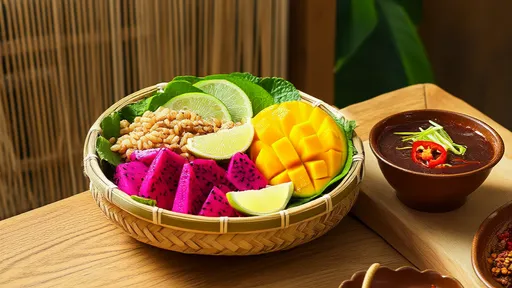
This discovery is far from a solitary oddity. It taps into a much broader and older tradition of pairing spices with fruit that spans the globe. In Southeast Asia, slices of green mango are routinely dipped in a mixture of salt, sugar, and chili powder—a combination that celebrates the interplay of sweet, sour, salty, and spicy. In Mexico, street vendors often serve cups of fresh pineapple, jicama, or watermelon dusted with tajín, a seasoning salt heavy with chili and lime. In the Middle East, it’s common to find dates and other sweet fruits subtly spiced with cardamom or cinnamon. What makes the apple and cumin pairing so compelling is its stark simplicity. It requires no elaborate recipe, no complex sauce. It is a minimalist’s masterpiece, proving that the most profound discoveries often require the fewest ingredients.
Adopting this practice is beautifully straightforward, but a few considerations can elevate the experience from interesting to sublime. The choice of apple is your first variable. A tart Granny Smith will create a sharper, more vibrant contrast, its acidity standing up boldly to the cumin’s strength. A sweeter, softer apple like a Red Delicious or Honeycrisp will yield a mellower, more harmonious blend where the sweetness is the dominant force, gently supported by the spice. The form of the cumin is equally critical. Pre-ground cumin from a jar will work in a pinch, but it often lacks vibrancy and can have a faintly dusty quality. For the full effect, whole cumin seeds toasted gently in a dry pan until they become fragrant and darken just a shade, then ground in a mortar and pestle or spice grinder, is the preferred method. This simple act unlocks the oil's volatile compounds, awakening the spice’s full spectrum of aroma and flavor—its earthiness, its smoke, its hidden citrus notes.
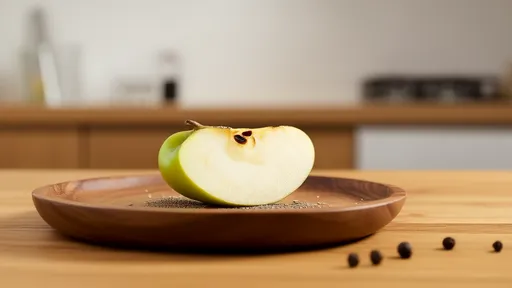
The application is the final step. It’s not a heavy coating one is after; it’s a delicate dusting. Slice your apple, arrange it on a plate, and using your fingertips or a small sieve, sprinkle a light, even layer of the freshly ground cumin over the slices. The goal is an accent, not a blanket. Then, eat immediately. This is a treat of texture as much as taste, and the perfect crunch of a freshly cut apple is part of the joy.
This pairing does more than just introduce a new snack option. It serves as a potent reminder that the boundaries we erect in our kitchens—between sweet and savory, between spice and fruit, between one cuisine and another—are often arbitrary and always meant to be crossed. It encourages a spirit of playfulness and experimentation. If cumin can transform an apple, what could sumac do for a strawberry? How would smoked paprika play on a slice of ripe pear? The world of flavor is vast and interconnected, waiting for a curious palate to make the next connection.
So, the next time you find yourself reaching for a routine apple, pause. Reach for the spice rack instead of the peanut butter. Take that jar of cumin, toast a few seeds, and grind them into a fragrant powder. Sprinkle it over the pale, crisp flesh and take a bite. You are not just eating a piece of fruit; you are participating in a small act of culinary rebellion, one that bridges ancient spice routes and modern curiosity. It is a testament to the fact that the most unexpected pairings can often yield the most extraordinary results, proving that sometimes, the best discoveries are waiting right there on your kitchen counter.

By /Aug 20, 2025
By /Aug 20, 2025

By /Aug 20, 2025
By /Aug 20, 2025

By /Aug 20, 2025
By /Aug 20, 2025
By /Aug 20, 2025
By /Aug 20, 2025

By /Aug 20, 2025
By /Aug 20, 2025
By /Aug 20, 2025

By /Aug 20, 2025

By /Aug 20, 2025
By /Aug 20, 2025
By /Aug 20, 2025

By /Aug 20, 2025

By /Aug 20, 2025
By /Aug 20, 2025

By /Aug 20, 2025
By /Aug 20, 2025
