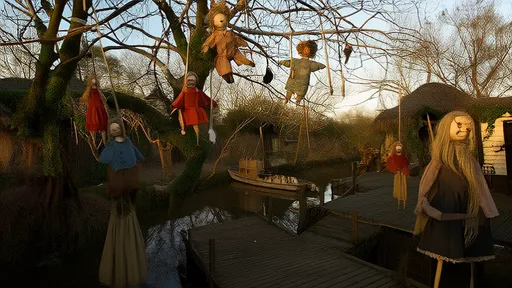
In the quiet canals of Xochimilco, south of Mexico City, lies an island that defies conventional tourism. Known locally as Isla de las Muñecas, or the Island of the Dolls, this small patch of land is home to one of the world's most unsettling collections. Hundreds, perhaps thousands, of decaying dolls hang from trees, fence posts, and crumbling structures, their glassy eyes staring vacantly at visitors. The air is thick with silence, broken only by the gentle lapping of canal water and the occasional creak of a rusted hook. This is not a theme park attraction but a shrine, born from tragedy and sustained by a legend that continues to draw the curious and the brave.
The story begins with Don Julián Santana Barrera, the island's sole inhabitant for over fifty years. A reclusive man, Don Julián chose a life of solitude on the island, far from the bustling city. The legend, as it is widely told, claims that one day in the 1950s, he discovered the body of a young girl who had drowned in the canals. Shortly after this tragic discovery, he found a doll floating nearby, which he believed belonged to the deceased child. As an act of respect and perhaps to appease her troubled spirit, he hung the doll from a tree.
What followed was a decades-long obsession. Don Julián became convinced that the girl's spirit was haunting the island. He claimed to hear her whispers and footsteps in the night, and he believed the dolls could ward off her ghost or capture her energy. He began to collect more dolls—from garbage dumps, from the canals, or in exchange for the vegetables he grew. He would hang them meticulously, often mutilating them if he felt they were "misbehaving" or if he experienced a particularly bad omen. The island slowly transformed into a macabre gallery, a physical manifestation of one man's fear, devotion, and declining mental state.
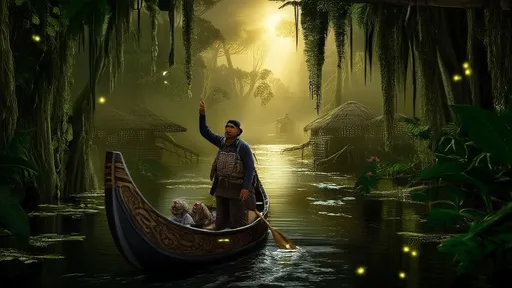
The atmosphere on the Island of the Dolls is palpable and deeply eerie. Visitors arrive by trajinera, the colorful, flat-bottomed boats that navigate Xochimilco's ancient waterways. The transition from the vibrant, music-filled main channels to the silent, murky approach to the island is jarring. The first sight of the dolls is unforgettable. They are in every state of decay: some are missing limbs, others have been stripped of their clothing by the elements, and many have been colonized by insects and moss. Their faces, once crafted to mimic childhood innocence, are now twisted into grotesque expressions, with empty eye sockets or cracked porcelain smiles.
Many visitors report an intense feeling of being watched. The dolls, with their fixed gazes, seem to follow your every move. Some travelers leave offerings—small toys, coins, or flowers—to show respect to the spirit of the girl or to Don Julián himself, adding another layer of ritual to the site. Guides often share stories of the dolls moving on their own, whispering to each other, or even opening and closing their eyes. Whether one believes these tales or not, the power of suggestion and the overwhelming visual stimulus create a psychological experience that is hard to shake.
The story took a final, grim turn in 2001. Don Julián Santana Barrera was found dead, drowned in the very same canal where he had allegedly found the little girl decades earlier. The circumstances of his death fueled the legend, with many seeing it as a fulfillment of a tragic destiny or the final act of the spirit he had tried to placate for so long. His family, who now maintain the island as a tourist attraction, have preserved his work, continuing to add dolls brought by visitors, ensuring that his eerie legacy lives on.
Beyond the ghost story, the Island of the Dolls raises profound questions about belief, memory, and the human psyche. It stands as a monument to one man's interpretation of a traumatic event. Psychologists might view it as an extreme case of coping mechanism, where Don Julián externalized his fear and guilt into a tangible, controllable project. Anthropologists see it as a fascinating example of modern folk religion, a spontaneously created site of pilgrimage that blends Catholic imagery (the dolls often resemble infant saints) with pre-Hispanic beliefs about death and the spirit world.
For the local community, the island's meaning is complex. It is a source of income, attracting tourists who might otherwise bypass the quieter parts of Xochimilco. Yet, it is also a place touched by what many consider *mal aire* (bad air) or spiritual unrest. It exists in a gray area—not quite a sacred site, not quite a haunted house, but something uniquely powerful in between.
Today, the Island of the Dolls is more accessible than ever, featured in travel blogs, documentaries, and television shows about the paranormal. This exposure has cemented its status as a must-see destination for those seeking experiences off the beaten path. However, this popularity comes with a risk of diluting the site's raw, unsettling energy, turning a deeply personal shrine into a spectacle. The challenge for its caretakers is to balance preservation with accessibility, ensuring that the story of Don Julián and the mysterious drowned girl is told with respect.
To visit the Island of the Dolls is to step into a living narrative, one that is still being written by every visitor who arrives with a mixture of skepticism and awe. It is a stark reminder that places are not just defined by their geography, but by the stories we attach to them. The dolls, in their silent, decaying vigil, are more than just plastic and porcelain; they are vessels for a legend of tragedy, obsession, and the enduring, unsettling boundary between the living and the dead.
By /Sep 28, 2025
By /Sep 28, 2025
By /Sep 28, 2025
By /Sep 28, 2025

By /Sep 28, 2025
By /Sep 28, 2025
By /Sep 28, 2025
By /Sep 28, 2025

By /Sep 28, 2025
By /Sep 28, 2025

By /Sep 28, 2025

By /Sep 28, 2025
By /Sep 28, 2025
By /Sep 28, 2025

By /Sep 28, 2025

By /Sep 28, 2025
By /Sep 28, 2025
By /Sep 28, 2025

By /Sep 28, 2025
By /Sep 28, 2025