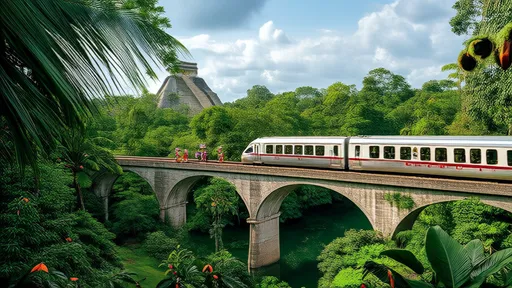
The rhythmic clatter of steel wheels now echoes through landscapes once traversed solely by the footsteps of ancient priests and the silent passage of jaguars. The monumental Maya Train project, a 1,500-kilometer ribbon of modern infrastructure, has officially been completed, forging an unprecedented physical and symbolic link between the pulsating tourist hub of Cancún and the remote, jungle-shrouded heart of the Maya world. This is more than a railway; it is a profound reconnection of a civilization's scattered soul, promising economic revival, sparking intense environmental debate, and offering travelers a journey through millennia.
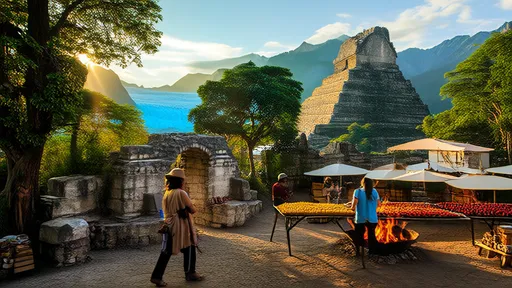
For decades, the magnificent Maya ruins of Chichén Itzá, Tulum, and Palenque have been accessible, yet their deepest context—the living, breathing cultural landscape that connects them—remained largely inaccessible to all but the most intrepid explorers. The Yucatán Peninsula's interior, a vast expanse of dense rainforest and secluded communities, held its secrets close. The Maya Train shatters this isolation. Its route is a deliberate arc through history, designed not as a mere point-to-point transit but as a cultural corridor. It loops around the peninsula, connecting five states—Chiapas, Tabasco, Campeche, Yucatán, and Quintana Roo—and bringing within reach over a dozen major archaeological sites, some of which were previously difficult to reach without days of arduous travel.
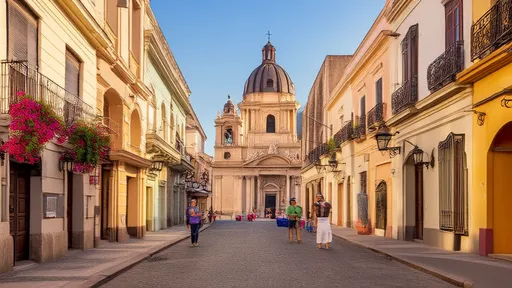
The project, a cornerstone of President Andrés Manuel López Obrador's administration, was envisioned as an engine for socioeconomic development in Mexico's historically underserved southeast. Proponents argue that the train will democratize tourism, spreading its economic benefits beyond the saturated hotel zones of Cancún and the Riviera Maya. Small towns like Izamal, the "Yellow City," and Valladolid, with their colonial charm and proximity to ruins, are poised to become significant stops on the itinerary. Local artisans, restaurateurs, and guides anticipate a new wave of visitors, hoping the train will bring sustainable prosperity and reduce the need for migration to larger cities. The government touts the creation of thousands of jobs, not only in operation but in the ongoing maintenance and the ancillary services that will inevitably spring up around the stations.
However, the train's path to completion has been anything but smooth, shadowed by a chorus of concern from environmentalists, archaeologists, and indigenous communities. The most vocal criticism centers on the ecological impact of carving a railway through one of the world's most fragile and biodiverse ecosystems. The Yucatán Peninsula sits atop a vast network of underwater caves and sinkholes known as cenotes, which provide the region's entire freshwater supply. Critics fear that the vibration from heavy trains and potential chemical spills could irreparably contaminate this vital aquifer. Furthermore, the construction has necessitated clearing significant swathes of jungle, fragmenting habitats for endangered species like jaguars and howler monkeys, and threatening the intricate balance of the ancient ecosystem.
The controversy extends to the cultural realm. The train tracks run perilously close to, and in some disputed cases, directly over, unexplored archaeological remains. The Maya civilization was vast, and much of its history still lies buried beneath the forest floor. Hastily conducted salvage archaeology, critics argue, may have missed crucial context, leading to the irreversible loss of cultural heritage. Indigenous communities, while hopeful for economic opportunity, have expressed unease about the potential for cultural commodification, land disputes, and the disruption of their traditional ways of life by an influx of tourists and rapid development.
Despite the controversies, the engineering feat itself is undeniable. The Tren Maya is a modern marvel designed with both efficiency and experience in mind. The fleet includes sleek, air-conditioned trains capable of speeds up to 160 kilometers per hour, offering different classes of service from standard seating to luxurious panoramic cars. The route is ingeniously planned to showcase the region's staggering diversity: passengers can gaze out at the turquoise Caribbean Sea, then plunge into the deep green of the rainforest, and later emerge onto the flat, limestone plains of the northern Yucatán, all in a single journey. Stations are being designed as cultural landmarks in their own right, often incorporating Maya architectural motifs and serving as gateways to their respective regions.
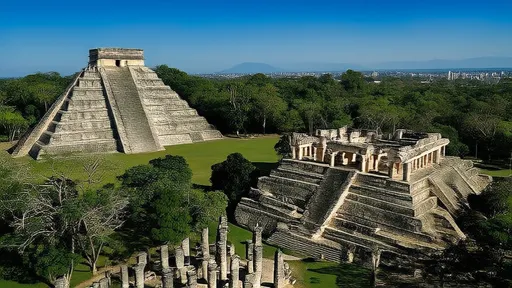
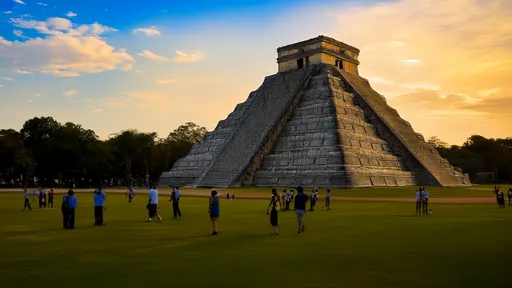
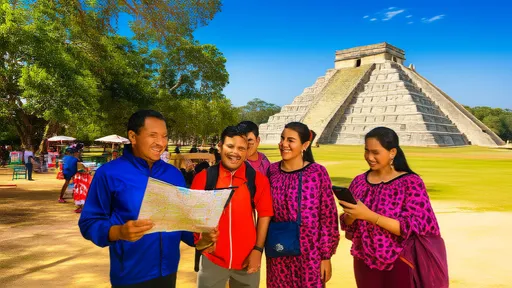
For the modern traveler, the completion of the Maya Train opens up a new paradigm of exploration. The classic "beach holiday" in Cancún can now be seamlessly combined with a deep cultural immersion. One can breakfast by the sea, board a train, and by lunchtime be standing in the shadow of the great pyramid of Kukulcán at Chichén Itzá, feeling the awe that has drawn pilgrims for over a thousand years. The train facilitates a more nuanced, region-wide understanding of the Maya civilization, allowing visitors to appreciate the distinct architectural styles and historical narratives of sites like the coastal fortress of Tulum, the grandiose Palenque nestled in the Chiapas highlands, and the rarely visited, immense city of Calakmul, deep in the biosphere reserve of the same name.
The true legacy of the Maya Train will be written in the years to come. Its success or failure hinges on a delicate balance. It must prove itself as a responsible steward of the environment, implementing rigorous safeguards and monitoring systems to protect the peninsula's unique ecology. It must ensure that economic benefits are distributed equitably, empowering local communities rather than displacing them. And it must foster a form of tourism that is respectful, educational, and sustainable, one that honors the profound spiritual and historical significance of the land it traverses. The tracks are now laid, a permanent scar and a potential lifeline across the jungle. The train is moving, carrying with it the hopes, fears, and future of the Maya world, inviting us all to witness its next great transformation.
By /Sep 28, 2025
By /Sep 28, 2025
By /Sep 28, 2025
By /Sep 28, 2025

By /Sep 28, 2025
By /Sep 28, 2025
By /Sep 28, 2025
By /Sep 28, 2025

By /Sep 28, 2025
By /Sep 28, 2025
By /Sep 28, 2025
By /Sep 28, 2025
By /Sep 28, 2025
By /Sep 28, 2025
By /Sep 28, 2025

By /Sep 28, 2025
By /Sep 28, 2025
By /Sep 28, 2025

By /Sep 28, 2025
By /Sep 28, 2025